
Where Is the World Cup 2026? Host Cities & Stadiums
Where is the World Cup 2026 being held? See the 16 host cities, stadiums, country split, venue map logic, and travel planning notes.
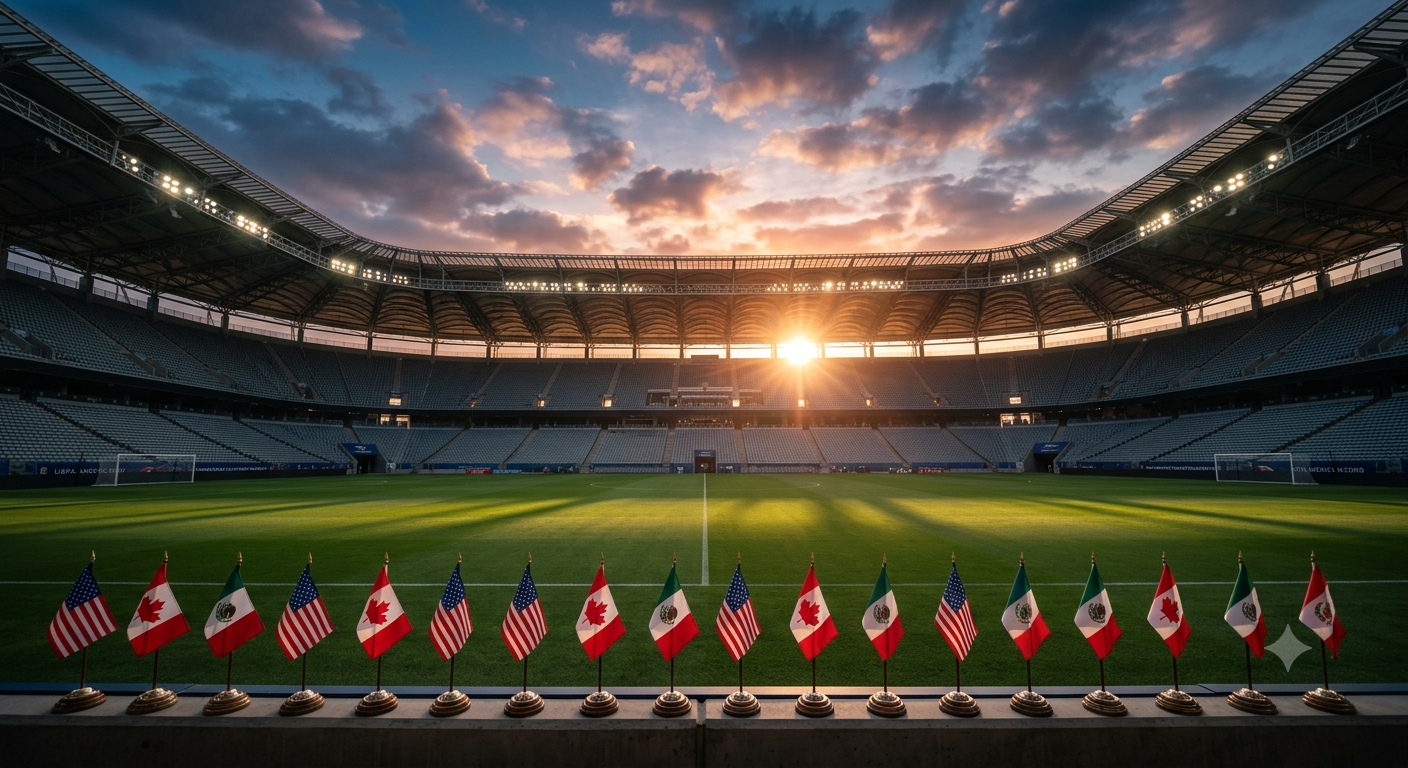
Where is the World Cup 2026? The tournament is being held across the United States, Canada, and Mexico, with matches staged in 16 host cities. It is the first men’s World Cup shared by three host nations, and the first edition with 48 teams and 104 matches.
The short answer is simple: most venues are in the United States, with additional host cities in Canada and Mexico. The useful answer is more specific. Fans need to know which cities are hosting, what stadium names are used for tournament purposes, how the country split works, and why a “World Cup 2026 location” search can return both city names and stadium names.
TL;DR
World Cup 2026 is being held in 16 host cities across three countries: the United States, Canada, and Mexico.
The United States has 11 host markets, Canada has 2, and Mexico has 3. That split reflects venue capacity, geography, and the expanded 48-team format.
The host cities are Vancouver, Seattle, San Francisco Bay Area, Los Angeles, Guadalajara, Kansas City, Dallas, Houston, Atlanta, Monterrey, Mexico City, Toronto, Boston, New York/New Jersey, Philadelphia, and Miami.
Stadium names may differ from commercial names. FIFA often uses clean tournament venue names such as “New York/New Jersey Stadium” instead of sponsored stadium branding.
Use the host-city map together with the match schedule. Cities tell you where matches can happen; the World Cup 2026 full schedule tells you when a specific match is played.
Where Is the World Cup 2026 Being Held?
The 2026 FIFA World Cup is being held in North America across three host countries: the United States, Canada, and Mexico. The format expands the tournament to 48 teams, which is why the host footprint is larger than a single-country event. Instead of one national venue map, the tournament uses a continent-scale network of stadiums.
That structure makes the host-city question more important than usual. A fan planning to attend one match in Toronto has a very different travel problem from a fan following a team from Los Angeles to Dallas to New York/New Jersey. The tournament is not one destination; it is a set of regional hubs connected by the match schedule.
The official host-city concept is also different from a simple list of stadiums. Some venues are identified by metro area rather than only city name, such as the San Francisco Bay Area and New York/New Jersey. That is why this guide treats host cities, stadiums, and travel regions together.
Source: FIFA — World Cup 2026 host cities
World Cup 2026 Host Cities and Stadiums
The table below gives a practical overview of the 16 host markets. Capacity figures should be treated as approximate planning context because tournament configuration, temporary seating, media zones, and operational requirements can affect the final matchday number.
Host Market | Country | Tournament Venue Name | Common Stadium Reference | Approx. Capacity Context |
Vancouver | Canada | Vancouver Stadium | BC Place | 54,000 |
Seattle | United States | Seattle Stadium | Lumen Field | 68,000 |
San Francisco Bay Area | United States | San Francisco Bay Area Stadium | Levi’s Stadium | 68,000 |
Los Angeles | United States | Los Angeles Stadium | SoFi Stadium | 70,000+ |
Guadalajara | Mexico | Guadalajara Stadium | Estadio Akron | 46,000+ |
Kansas City | United States | Kansas City Stadium | Arrowhead Stadium | 70,000+ |
Dallas | United States | Dallas Stadium | AT&T Stadium | 80,000+ |
Houston | United States | Houston Stadium | NRG Stadium | 70,000+ |
Atlanta | United States | Atlanta Stadium | Mercedes-Benz Stadium | 70,000+ |
Monterrey | Mexico | Monterrey Stadium | Estadio BBVA | 50,000+ |
Mexico City | Mexico | Mexico City Stadium | Estadio Azteca | 80,000+ |
Toronto | Canada | Toronto Stadium | BMO Field | 45,000+ tournament configuration |
Boston | United States | Boston Stadium | Gillette Stadium | 65,000+ |
New York/New Jersey | United States | New York/New Jersey Stadium | MetLife Stadium | 80,000+ |
Philadelphia | United States | Philadelphia Stadium | Lincoln Financial Field | 67,000+ |
Miami | United States | Miami Stadium | Hard Rock Stadium | 65,000+ |
This table is meant as a planning hub, not a ticketing guarantee. Always check FIFA and the local host-city page before booking travel, because final match allocations, public transport operations, and event-day rules can vary by venue.
The venue list also explains why World Cup 2026 planning can feel more complex than a normal tournament guide. Some readers search by country, some by city, and some by stadium brand name. A good planning workflow starts by translating those three layers into one map: host country, host market, and tournament venue. Once those layers are clear, the schedule becomes easier to interpret because a match listed in “New York/New Jersey” is no longer confused with a match in New York City proper, and a match listed in “San Francisco Bay Area” is understood as a Bay Area venue rather than a downtown San Francisco stadium.
For editorial and SEO purposes, this is also why the host-city article should remain a hub rather than a transportation article. The hub answers the stable questions: where the tournament is held, which cities are involved, and what stadiums correspond to each host market. City-specific pages can handle changing details such as shuttle routes, local fan zones, temporary traffic restrictions, and airport transfer advice.
How the Three-Country Split Works
The United States carries most of the venue footprint, with 11 host markets across the West Coast, South, Midwest, and East Coast. Canada hosts matches in Vancouver and Toronto, giving the tournament a western and eastern Canadian presence. Mexico hosts in Guadalajara, Monterrey, and Mexico City, including one of the most historic World Cup venues in Estadio Azteca.
This split matters because the tournament is geographically large. A city list alone can make the event feel compact, but the travel reality is closer to multiple regional tournaments connected by air travel. Seattle and Vancouver are regional neighbors; Los Angeles and San Francisco are a West Coast pair; Dallas and Houston can function as a Texas cluster; New York/New Jersey, Philadelphia, and Boston create an East Coast corridor.
For fans, the practical move is to plan around clusters rather than the full map. If you are following a national team, start with the World Cup 2026 schedule and fixture guide, then map the team’s venues. If you are attending for the experience, choose a region first and then decide which matches fit your dates.
The country split also affects time zones. A fan watching from Europe, Asia, or South America may experience the same tournament as a sequence of very different kickoff windows depending on whether a match is in Mexico City, Los Angeles, Toronto, or New York/New Jersey. That is one reason the host-city layer works best when paired with a calendar layer. The city tells you the place; the calendar tells you what that place means in your local time.
From a travel perspective, the three-country format rewards early decisions. If your priority is stadium variety, you may want a cluster such as Vancouver–Seattle or New York/New Jersey–Philadelphia–Boston. If your priority is following one team, the draw and bracket matter more than the map. If your priority is a once-in-a-lifetime venue, Mexico City or a final-stage U.S. stadium may drive the decision.
United States Host Cities
The United States host markets cover the largest part of the tournament. They include Seattle, the San Francisco Bay Area, Los Angeles, Kansas City, Dallas, Houston, Atlanta, Boston, New York/New Jersey, Philadelphia, and Miami. That spread gives the tournament venues in major media markets, large NFL stadiums, and multiple climate zones.
For visitors, the U.S. cities should not be treated as interchangeable. Los Angeles and Miami create very different travel and weather experiences. Dallas and Houston offer large stadium capacity but require different local transit assumptions. New York/New Jersey and Philadelphia are close enough for some fans to consider a multi-city East Coast trip, while Seattle and Vancouver can be paired for a Pacific Northwest route.
The most important planning rule is to avoid assuming that a team will stay in one region. The group draw and knockout bracket can move teams across long distances. Use the host-city page for geography, but use the schedule page for actual match movement.
The U.S. venue footprint can be understood in four broad regions. The West Coast includes Seattle, the San Francisco Bay Area, and Los Angeles, which makes it attractive for fans who want a multi-city trip without crossing the continent. The central and southern venues include Kansas City, Dallas, Houston, and Atlanta, where large stadiums and air connectivity are major strengths. The East Coast corridor includes Boston, New York/New Jersey, and Philadelphia. Miami adds a South Florida endpoint with a very different climate and travel pattern.
This regional view is more useful than ranking host cities in isolation. A fan may prefer the atmosphere of one city, the capacity of another, or the flight access of a third. But World Cup planning usually depends on combinations: where the match is, where the next match might be, and how much time you have between them. The U.S. map gives fans many options, but it also makes over-planning risky until the match schedule and ticket allocation are clear.
Canada and Mexico Host Cities
Canada’s two host cities are Vancouver and Toronto. Vancouver gives the tournament a Pacific venue with strong regional links to Seattle, while Toronto provides an eastern Canadian hub. Both cities are useful for fans who want a World Cup trip with major-city infrastructure and international flight access.
Mexico’s three host cities are Guadalajara, Monterrey, and Mexico City. Mexico City is especially significant because Estadio Azteca is one of world football’s landmark venues. Guadalajara and Monterrey add major football markets with distinct regional identities, giving Mexico more than a single symbolic hosting role.
These five non-U.S. host cities are not side notes. They are central to the three-country identity of the tournament. If you are building a travel plan around host nations rather than only teams, Canada and Mexico should be treated as full planning regions.
Vancouver and Toronto also serve different kinds of visitors. Vancouver can pair naturally with Seattle for fans considering a Pacific Northwest route, while Toronto is better placed for travelers who want an eastern Canadian base with major international connections. Both cities give Canada a visible role without requiring fans to build an entire trip around Canadian venues only.
Mexico’s three-city footprint is equally important because it connects 2026 to World Cup history. Mexico City has hosted iconic tournament moments before, while Guadalajara and Monterrey bring different football cultures and regional fan bases into the tournament. For readers asking “where is the World Cup 2026 being held,” Mexico is not just a co-host label; it is a core part of the tournament identity.
Because these cities sit in different travel and climate contexts, fans should avoid assuming one North American planning rule fits all five. A Vancouver trip, a Toronto trip, and a Mexico City trip involve different airports, local transport assumptions, weather expectations, and matchday routines. This guide stays high-level so that city-specific pages can handle those details without making the hub too heavy.
Stadium Names, Sponsored Names, and FIFA Venue Names
One confusing part of World Cup planning is stadium naming. Fans often know a venue by its commercial name, but FIFA tournament materials may use a clean event name. For example, a stadium can be widely known by a sponsor name while tournament references use a city-based label.
This is normal for global events. It reduces commercial conflicts and keeps venue references consistent across official materials. For SEO and reader clarity, a good host-city guide should include both the tournament venue name and the common stadium reference.
When in doubt, search by city and stadium together. “New York/New Jersey Stadium MetLife” or “Los Angeles Stadium SoFi” is usually clearer than searching only the tournament label. For match attendance, rely on the official ticketing and host-city instructions rather than a generic map result.
This distinction also matters for publishing accuracy. A host-city hub should avoid mixing unofficial nicknames, sponsored names, and tournament names as if they were interchangeable. The clearest approach is to show the FIFA-style venue label and the common stadium reference side by side. That lets searchers recognize the stadium they know while still matching the wording they may see in official tournament materials.
It also prevents a common reader problem: assuming that a city label always means the stadium is located in the city center. Some stadiums sit in wider metro areas or neighboring jurisdictions. New York/New Jersey is the obvious example, but the same planning principle applies elsewhere. Always confirm the actual venue location before booking a hotel or planning a matchday route.
Travel Planning Notes: Keep It High-Level
This page is a host-city hub, not a detailed transportation guide. The right level of travel detail is simple: identify the nearest major airport, check whether the city has useful rail or metro options, and wait for official matchday shuttle or transit guidance before finalizing local movement.
For many venues, airport access and stadium access are separate problems. A city can be easy to fly into but still require careful planning on matchday. Large stadiums often use special event traffic plans, temporary shuttle routes, or restricted parking rules during major events.
If you are planning around the United States national team, use the USA World Cup 2026 schedule and reminders guide together with this host-city overview. That combination gives you both the venue map and the match timing layer.
The right travel sequence is venue first, match second, local movement third. Do not start with a hotel or transit assumption before you know whether the match is actually in that city and whether the kickoff time creates a same-day travel problem. Once the match is confirmed, check the local host-city page for official mobility guidance, then use your calendar to block travel time around the event.
For international visitors, the largest risk is underestimating distance. A map of North America can make host cities look like a connected tour route, but many city pairs require flights and recovery time. Treat each region as its own planning unit unless you have enough days between matches. This is especially important in the knockout stage, where a team’s next venue depends on results.
How to Use This Host-City Guide
Use this article as the geographic layer of the World Cup 2026 content set. It answers where the tournament is being held, which cities and stadiums matter, and how the three-country split works. It should not replace the schedule, ticketing pages, or local travel pages.
If you are choosing where to attend, start with the host-city clusters. If you are following a team, start with the schedule. If you are building a calendar plan, subscribe to match reminders after you know which cities and dates matter. The host-city map is the first layer, not the whole plan.
For readers who only want a quick answer, the host-city table is enough. For readers making travel decisions, the table should be combined with three other layers: the fixture list, the ticketing status, and the local host-city guidance. Those layers answer different questions. The host-city hub says where matches can happen. The schedule says when they happen. Ticketing says whether you can attend. Local guidance says how to get to and from the venue.
That separation keeps the article useful over time. Host cities and stadiums are relatively stable; transport operations and fan-zone details can change closer to matchday. By keeping this page focused on the durable geography of the tournament, it remains a reliable canonical reference while more specific pages can update around local details.
Conclusion
The World Cup 2026 is being held across 16 host cities in the United States, Canada, and Mexico. The United States has the largest venue footprint, Canada provides Vancouver and Toronto, and Mexico contributes Guadalajara, Monterrey, and Mexico City. Together, those cities create the largest geographic hosting map in men’s World Cup history.
For fans, the practical answer is to treat host cities as planning regions. Use this page to understand the map, use the schedule to identify actual match dates, and use official FIFA and host-city pages before booking travel.
FAQ
Where is the World Cup 2026 being held?
The World Cup 2026 is being held in the United States, Canada, and Mexico. Matches are spread across 16 host cities in the three countries.
How many host cities does World Cup 2026 have?
World Cup 2026 has 16 host cities. The United States has 11 host markets, Canada has 2, and Mexico has 3.
Which countries are hosting World Cup 2026?
The host countries are the United States, Canada, and Mexico. It is the first men’s World Cup shared by three host nations.
What are the World Cup 2026 stadiums?
The stadiums include venues commonly known as BC Place, Lumen Field, Levi’s Stadium, SoFi Stadium, Estadio Akron, Arrowhead Stadium, AT&T Stadium, NRG Stadium, Mercedes-Benz Stadium, Estadio BBVA, Estadio Azteca, BMO Field, Gillette Stadium, MetLife Stadium, Lincoln Financial Field, and Hard Rock Stadium.
Is the World Cup 2026 only in the United States?
No. The United States hosts most venues, but the tournament also includes Canada and Mexico. Canada hosts in Vancouver and Toronto, while Mexico hosts in Guadalajara, Monterrey, and Mexico City.
Related Reading
World Cup 2026 Guide — the main hub for tournament format, schedule, and planning.
World Cup 2026 Schedule: Full Fixtures & Calendar Sync — match dates and calendar context.
USA World Cup 2026 Schedule: Match Times & Reminders — USMNT-specific schedule planning.
Get automation tips for your workflow
Weekly insights for non-technical professionals. No spam ever.