
What Is a Persistent AI Agent — and Why Does It Matter?
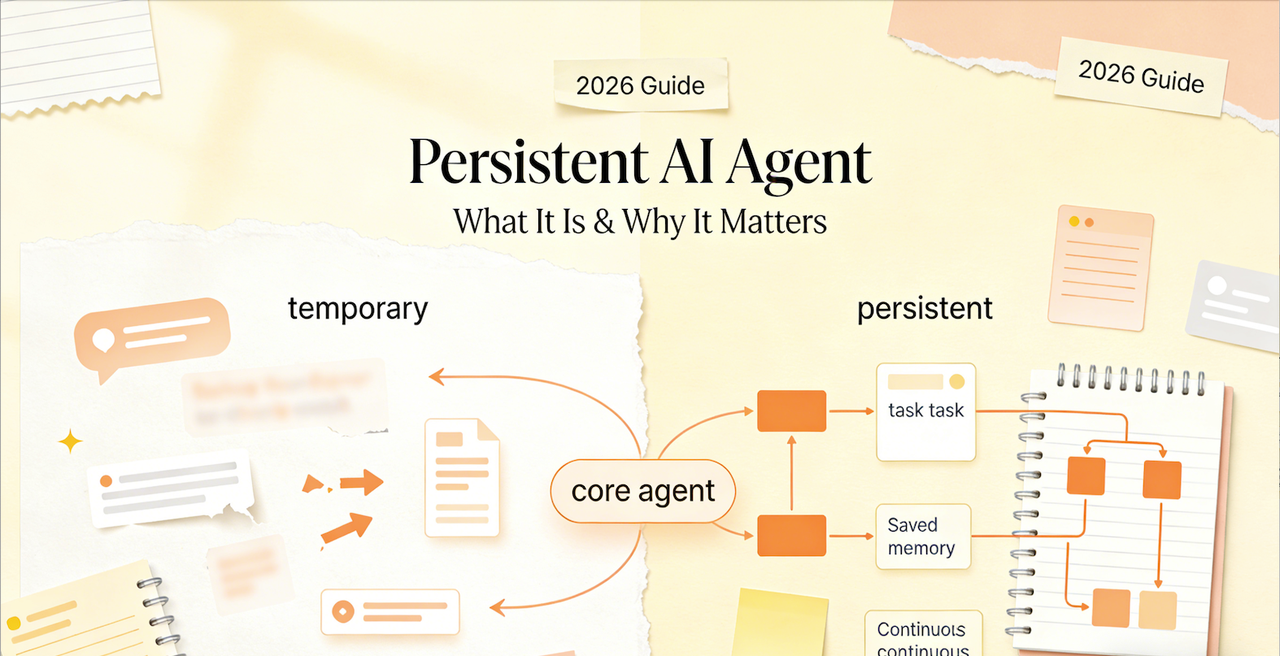
A persistent AI agent doesn't forget you when the session ends. Here's what that actually means for how you work — and why it's becoming the most important idea in personal AI.
What Is a Persistent AI Agent — and Why Does It Matter?
Hi, I'm Nova. I've been thinking about this concept a lot lately, and I finally sat down to write it out properly.
I keep seeing "Hermes Agent" pop up in my feeds — developers talking about it, technical threads on GitHub, the occasional Reddit post from someone excitedly running it on a $5 VPS. My first instinct was to scroll past. Another AI tool, probably developer-only, probably not relevant to the way I actually work.
But then I came across a phrase that stopped me: "most AI tools are stateless — every conversation starts from zero."
Okay. That hit differently. Because I've felt that problem every single day.
This article isn't a tutorial on setting up Hermes Agent. It's me trying to get a clear head around the concept it represents — persistent AI agents — and whether any of it actually matters to people like us who aren't developers.
What Makes an AI Agent "Persistent" — and How It Differs from a Chatbot
Here's the simplest way I can explain the difference.
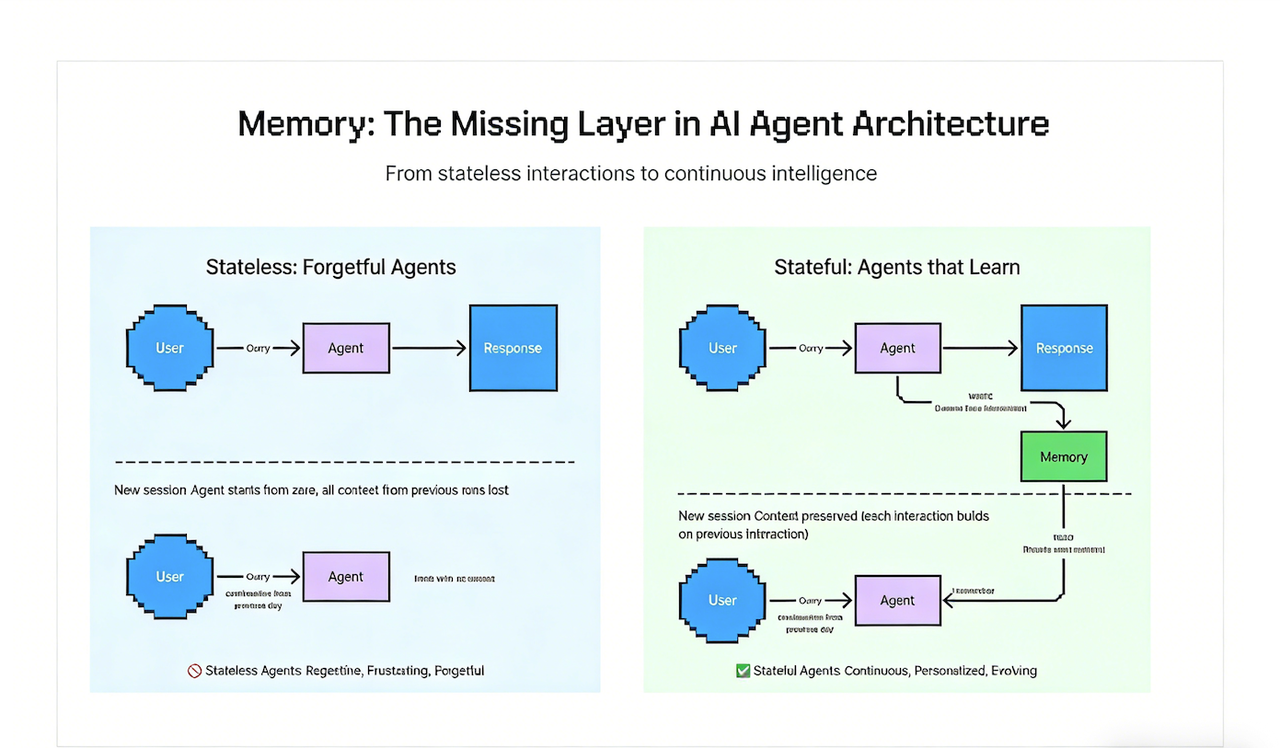
When you open ChatGPT, Claude, or any standard chat interface, the AI has no memory of you. You could have had a brilliant conversation yesterday about your content strategy, your client's preferences, your unusual niche — none of it exists anymore. You start over. Every time.
That's what "stateless" means. The model processes what you give it right now, in this session, and then the slate is wiped.
A persistent AI agent is the opposite. It's designed to carry information forward — your preferences, your working patterns, the problems it helped you solve — across every session, every day. Not just a chat history you scroll back through, but an actual evolving model of who you are and how you work.
Traditional memory in LLMs works like RAM: fast access to current context, but cleared after each session. AI-native memory functions more like a hard drive — information is stored, updated, and referenced continuously. That distinction sounds technical, but the practical difference is enormous.
Session-Based vs. Persistent: What Actually Changes
Think about the last time you started a new conversation with an AI tool and spent the first five minutes re-explaining your project, your tone, your audience, your constraints. You weren't being inefficient — you were doing what the tool required.
Persistent context solves that specific friction. Agent memory supports long-term recall across sessions, maintaining persistent identity and learned behaviors that context windows can't preserve. Stateful agents can automate workflows that stateless systems simply can't handle — they maintain context across conversations, learn from past interactions, and make decisions based on historical patterns.
The Context Reset Problem That Persistent Agents Solve
There's a thing I've started calling "re-onboarding tax" — the invisible time cost of explaining yourself to an AI every single session. It's not huge per conversation. But it adds up, especially when you're working on ongoing projects with a lot of accumulated context.
The deeper problem is that simply enlarging context windows doesn't fix this — performance can degrade under real workloads, retrieval becomes expensive, and costs compound. Some researchers have called this "context rot": without context management, an AI agent's responses can become inaccurate or unreliable.
Persistent agents approach this differently. Instead of dumping everything into a single window, they selectively store and retrieve what matters.
What a Persistent Agent Actually Remembers
This is the part I find genuinely interesting to think about — not just that it remembers, but what it remembers and how.
Your Projects, Preferences, and Working Patterns
According to AWS's own documentation on agent memory, the goal is to transform one-off conversations into continuous, evolving relationships — so agents can stop asking for the same information repeatedly ("What's your account number?") and remember preferences that actually matter ("I'm allergic to shellfish").
Apply that to knowledge work: an agent that knows you write in a specific style, prefer morning check-ins, have three active projects with different audiences — that's a different kind of working relationship.
Skills It Builds from Solving Hard Problems
This is where Hermes Agent specifically does something I hadn't seen before. After completing a complex task, the agent can save the approach as a reusable "skill" for next time. These skills are stored as structured documents — the agent creates them automatically after difficult tasks, and they follow a progressive disclosure pattern to minimize unnecessary token usage.
The analogy that landed for me: it's less like a tool you pick up, and more like a junior assistant who writes their own SOPs as they figure things out.
Past Conversations It Can Search and Recall
Unlike traditional AI models that process each task independently, AI agents with memory can retain context, recognize patterns over time, and adapt based on past interactions — capabilities that are essential for goal-oriented applications where adaptive learning is required.
Being able to ask "what did we decide about this last month?" and actually get a useful answer — that's the use case I keep coming back to.
What Hermes Agent and Similar Projects Are Trying to Do
Hermes Agent is an open-source project built by Nous Research, released in early 2026. I haven't set it up myself — I'm going to be upfront about that — but I've read through the official documentation pretty carefully, and the architecture is worth understanding even if you never run it.

The Core Idea: An Agent That Grows the More You Use It
Hermes Agent is built around the premise that most AI tools are stateless — every conversation starts from zero. The alternative it proposes: an agent that accumulates knowledge, builds skills, and becomes more useful the longer you use it, with persistent memory across all sessions so you don't repeat yourself.
What caught my attention is that the learning loop is explicit and architectural, not a bolt-on feature. The agent is designed to nudge itself to store knowledge, search its own past conversations, and build a model of who you are over time.
Why This Is Different from ChatGPT Memory or Notion AI
I've used both. ChatGPT's memory feature is useful but shallow — it stores discrete facts ("user prefers bullet points"), not the texture of how you work. Notion AI operates within whatever you've already put into Notion — it doesn't observe your behavior and form its own understanding.
The architectural ambition of projects like Hermes Agent goes further than incremental memory features bolted onto a session-based tool. They are designed from the ground up to run continuously, learn over time, and reach users across messaging platforms.
That's a different category of thing. Whether it's a category most of us need right now — that's the honest question.
Who Benefits Most from Persistent AI Agents
Here's my actual take, and I'm not going to hedge it.
If you're a developer or researcher — someone who runs infrastructure, works in the terminal, is comfortable with SSH and Docker and command-line configuration — persistent agents like Hermes Agent are probably genuinely exciting right now. The system supports six terminal backends (local, Docker, SSH, Daytona, Singularity, and Modal), with serverless persistence options so the environment hibernates when idle, and multi-platform messaging from a single gateway. That's a powerful setup if you know what to do with it.
If you're a solo operator, content creator, or knowledge worker who doesn't touch infrastructure — the raw concept is relevant, but the current implementation of most persistent agents isn't built for you yet.
The setup overhead is real. You need to be comfortable running something on a server, managing configuration, and tolerating the kind of rough edges that come with early-stage open-source projects.
The idea of persistent context — an AI that actually knows your work — that matters enormously for how we work. The tools that deliver it accessibly for non-developers are still catching up.
What "Persistent" Does NOT Solve
I want to name this clearly because I've seen a lot of hype around this concept and not enough honest accounting.
Setup overhead is significant. Running an agent persistently requires infrastructure. For most people I know in the solo-operator world, that's a real barrier — not a political one, just a practical time-and-attention one.
Maintenance is a thing. A persistent agent that's learning and building skills needs some amount of gardening. Outdated memory, irrelevant skills, conflicting context — in practice, memory is often fragmentary, persistent, and invisible. Agents may carry over personal details without making them visible to the user, which can create tradeoffs between convenience and risks to privacy and accountability.
Trust and autonomy limits. Giving an agent persistent knowledge of how you work is genuinely useful. But the more it operates autonomously, the more you need to understand what it's doing and why. That's a skill most of us haven't developed yet
Where This Concept Is Heading — and What to Watch
The honest answer is that we're early. The category of "persistent AI agents" is real and the underlying problem it solves is real. But the tools that solve it in a way that's accessible to non-developers are only starting to appear.
What I'd watch: the workspace layer. Tools that take the concept of persistent context and deliver it through an interface that doesn't require server setup. Floatboat, for example, is approaching this from the workspace side — learning how you actually work through a desktop application rather than a self-hosted agent runtime. It's a different entry point to the same underlying idea: an AI that knows you over time. I haven't used it long enough to have a strong opinion, but I'm paying attention to that direction.
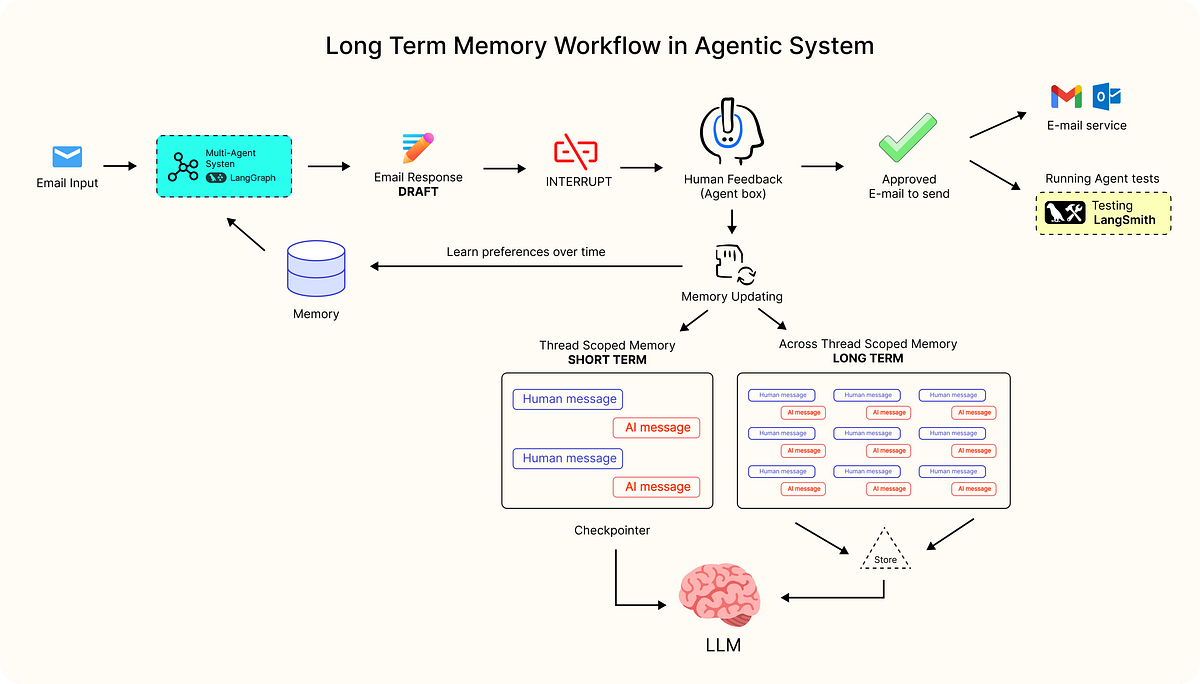
The broader pattern is that as AI systems function autonomously across various tools, applications, and environments, persistent memory allows these systems to reason, reflect, and take continuous action — evolving from stateless executors into adaptive collaborators.
That shift is coming whether or not any specific tool becomes the way most people access it.

FAQ
Do I need to be a developer to use a persistent AI agent?
For most current tools in this category — yes, practically. Projects like Hermes Agent require terminal comfort and server setup. Non-developer-friendly versions of this concept are starting to appear as desktop applications, but they're early.
Is ChatGPT's memory feature the same thing?
No — it's in the same family but much shallower. ChatGPT memory stores discrete facts across conversations. A true persistent agent architecture is designed to observe patterns, build skills, and maintain a model of your working behavior over time. The IBM documentation on AI agent memory has a useful breakdown of the technical distinctions.
What's the risk of an agent accumulating wrong information about me?
It's real and worth thinking about. Memory that's persistent but not curated can create drift — the agent "knows" things about you that are outdated or wrong, and you may not realize it's operating from stale context. Any serious persistent agent setup needs some mechanism for reviewing and pruning memory. The New America policy brief on AI agents and memory covers the privacy dimension of this in depth.
How does this compare to RAG?
Different problem. RAG (Retrieval-Augmented Generation) pulls external knowledge into a prompt at inference time — it's great for grounding answers in documents. But as Mem0's overview of agent memory explains, RAG is fundamentally stateless — it has no awareness of previous interactions or how the current query relates to your history. Persistent agent memory brings continuity; RAG brings knowledge.
What's the most accessible way to experiment with persistent context today?
If you're non-technical: tools like Notion AI paired with a very structured workspace, or the memory features in Claude or ChatGPT, give you a lightweight version of this. If you're willing to get your hands a bit dirty: the Hermes Agent GitHub repository is well-documented and the community is active.
I'm still figuring this out — the persistent agent space is moving fast enough that anything I write here will probably look incomplete in a few months. But I think the underlying concept is clear enough to be worth tracking: the difference between an AI that helps you in a session and an AI that actually knows how you work.
That shift matters. The tools that deliver it in a genuinely accessible way — that's what I'll be watching next.
Anyway, that's today's little discovery. Or at least today's honest attempt to map something I find genuinely interesting.
Previous Posts:
Get automation tips for your workflow
Weekly insights for non-technical professionals. No spam ever.